Directed by: Carol Reed
Written by: Walter Ebert (story), Harry Kurnitz (screenplay), Eric Linklater (screenplay) (uncredited)
Starring: James Mason, Claire Bloom, Hildegard Knef, Geoffrey Toone, Aribert Wäscher, Ernst Schröder, Karl John
WARNING: Plot and/or ending details may follow!!! [Paragraph 3 only]
Following the release of his masterpiece The Third Man (1949), a refreshingly-offbeat amalgam of British noir and Ealing-style whimsy, director Carol Reed was heralded as one of the era's most promising filmmakers. Critical admirers anxiously awaited his follow-up effort, which was four years coming. Today, the consensus appears to regard The Man Between (1953) as little but a pale imitation of The Third Man. Certainly, the two films share similar scenarios, both involving a foreigner's espionage-tinged visit to a war-torn city (Vienna and Berlin, respectively) that has been divided by opposing powers. However, despite lacking Graham Greene's wry sense of humour, and particularly the boyish charisma of Orson Welles, Reed's follow-up picture is nonetheless an excellent drama, blending romance and tragedy with the director's usual flair for generating atmosphere and international intrigue. The fine chemistry between stars James Mason and Claire Bloom finds a life of its own amid the rubble-strewn ruins of a city still at war with itself.
 Young British woman Susanne Mallison (Claire Bloom, whom Chaplin had discovered the previous year for Limelight (1952)) arrives in Berlin to visit her brother (Geoffrey Toone), who has married German-born Bettina (Hildegard Knef). Through her sister-in-law, Susanne is introduced to the enigmatic Ivo Kern (James Mason), a professional kidnapper with ambiguous allegiances towards both the Eastern and Western powers. Screenwriter Harry Kurnitz had a talent for illustrating characters with hidden motives and concealed secrets (see Witness for the Prosecution (1957), The Web (1947) or either of his Thin Man features), and his screenplay spends its first half ominously exploring the intentions of Bettina, whose association with Ivo implicitly suggests a family betrayal. Interestingly, the character is effectively abandoned in the film's second half, but to the film's advantage, as Susanne and Ivo are relentlessly hunted in the Eastern Bloc following a botched kidnapping. Here, Reed narrows his dramatic focus, but the doomed romance between Bloom's young idealist and Mason's war-weary criminal remains appropriately understated, inspiring empathy without stooping to melodrama.
 Despite the absence of Robert Krasker, The Man Between is a beautifully shot film, with director-of-photography Desmond Dickinson capturing, not only the atmosphere, but the foreboding personality of the crumbling German capital. John Addison's musical score is haunting and graceful, certainly a far cry from Anton Karas' zither, but nonetheless effective in its own right. One thing I've noticed about every Carol Reed film I've seen (and the tally currently sits at seven) is that all the performances are perfect – not only the main and supporting stars, but everybody down to the briefest of speaking roles. James Mason sports a convincing German accent, and Claire Bloom is simply adorable in her naive innocence, with a smile that will melt your heart. A particularly important character is young Horst (Dieter Krause), whose love Ivo instinctively rejects, for such a criminal can never allow himself to form attachments to those he must inevitably abandon. Ultimately, and tragically, it is Horst's devotion that results in Ivo's death, the final proof that love and death are never far apart.
8/10
Currently my #7 film of 1953:
1) From Here To Eternity (Fred Zinnemann)
2) Stalag 17 (Billy Wilder)
3) I Confess (Alfred Hitchcock) *
4) The Titfield Thunderbolt (Charles Crichton)
5) Le salaire de la peur {The Wages of Fear} (Henri-Georges Clouzot)
6) Roman Holiday (William Wyler)
7) The Man Between (Carol Reed) *
8) The Band Wagon (Vincente Minnelli)
9) Pickup on South Street (Samuel Fuller) *
10) The War Of The Worlds (Byron Haskin)
2) Stalag 17 (Billy Wilder)
3) I Confess (Alfred Hitchcock) *
4) The Titfield Thunderbolt (Charles Crichton)
5) Le salaire de la peur {The Wages of Fear} (Henri-Georges Clouzot)
6) Roman Holiday (William Wyler)
7) The Man Between (Carol Reed) *
8) The Band Wagon (Vincente Minnelli)
9) Pickup on South Street (Samuel Fuller) *
10) The War Of The Worlds (Byron Haskin)

 Despite a slow first half, in which Fields' typical espionage duties are introduced via a lot of silent waiting, The Thief picks up substantially once the American authorities catch wind of his crimes. Rouse cultivates some truly thumping suspense sequences, including a magnificent stairway pursuit up the then-tallest building in the world, the Empire State. This breathless flight from the 88th floor observatory to the 102nd floor, and beyond, serves as a convenient allegory for Fields' Communist involvement. As an FBI agent rushes in pursuit, Milland's character tries repeatedly to escape through service doors on each floor, only to find them locked each time. Throughout the film, despite wishing to abandon his treasonous practices, Fields consistently finds his path to freedom blocked, his only option to continue what he's been doing, further implicating himself with each staircase he ascends. When inevitably cornered high above New York City, ironically defenseless at the pinnacle of human achievement, Fields desperately lashes out at his aggressor, and does the unthinkable.
 In spite of my reservations that only a low-budget film could get away with such an anachronistic style, The Thief does, in fact, boast excellent production values. Sam Leavitt's cinematography is graceful but with an edge of documentary-realism. I particularly enjoyed the lurid confusion of Fields' nervous breakdown (perhaps a nod to Wilder's The Lost Weekend (1945)), with an increasingly-claustrophobic Milland filmed from above like an insignificant pawn, as specks of blood appear to permeate the walls. Despite his Oscar, Ray Milland is one of his generation's most underrated leading men, and he handles an exceedingly difficult role with poise and empathy: just watch Fields' pang of guilt every time he glances at the Capitol Dome, a symbol of American nationalism. Despite its sympathetic portrayal of a Commie spy, the film is nevertheless patriotic, as it must have been at this time. Indeed, Fields' ultimate decision to confess everything to the FBI comes not with the realisation that he is a bad person, but the realisation that he is a bad American.
 McEvoy's film unfolds in an unglamorous docu-drama style. Reed Hadley's narration sounds as though it was plucked straight from a newsreel, reciting facts as if reading off the official police transcript. This technique does feel a little cheap at times, but fortunately the narration is largely restricted to the film's bookends, as well as providing some explanatory filler during breaks in the plot. The "killer" stalking New York, in this story, is not a rug importer from Mexico, but beautiful diamond smuggler Sheila Bennet (Evelyn Keyes), who has just arrived from Cuba. Within days, Sheila has two parties independently pursuing her: a treasury agent (Barry Kelley) looking to arrest her for smuggling crimes, and a team of doctors (led by William Bishop) who have identified her as the source of the smallpox outbreak. As in 'Panic in the Streets,' an otherwise routine manhunt is given a heightened sense of urgency, particularly when those in pursuit initially have no idea as to the identity or appearance of their suspect.
 The Killer That Stalked New York, for the most part, manages to sidestep its low production budget. Aside from a select few lines of dialogue ("we have to stop it!" exclaims Dr. Wood at one point, as though coming to a difficult decision), the filmmakers and cast members allow the story to unfold in a realistic, engrossing fashion. Indeed, in this regard, the low budget quite possibly aids the film's intentions, necessitating a documentary style that adds to the immediacy of the outbreak scenario. Evelyn Keyes is excellent in the leading role, showing obstinate resilience in the face of unimaginable torment; by the film's end, she appears so brutally incapacitated by her illness that it's almost painful to look at her face. Aside from the virus, Charles Korvin is the main villain of the piece, as Sheila's greedy and adulterous husband who, rest assured, gets everything that's coming to him. And if all nurses looked like Dorothy Malone, perhaps catching smallpox wouldn't seem like such a bad break, after all.
 WARNING: Plot and/or ending details may follow!!! [Paragraph 3 Only]
 Most noir enthusiasts would, I'm sure, agree that the modern heist thriller was basically born with John Huston's The Asphalt Jungle (1950). But it wasn't alone for long. Just one month after its release, Richard Fleischer released his own heist flick, a low-budget B-movie with no star power (unless you count supporting player Charles McGraw, who was no stranger to film noir – see
  WARNING: Plot and/or ending details may follow!!!
  When just-out-of-prison pickpocket Skip McCoy (Richard Widmark) snags the purse of a woman on the subway (Jean Peters), he pockets more than he'd originally bargained for. The woman, Candy, and her cowardly ex-boyfriend Joey (Richard Kiley) had been smuggling top-secret information to the Communists, and McKoy has unexpectedly retrieved an important roll of micro-film. Will he turn in the MacGuffin to the proper authorities, or sell it to the highest bidder? If Pickup on South Street has a flaw, it's that the story seems designed solely to bolster an anti-Communist agenda, reeking of propaganda like nothing since WWII {Dwight Taylor, who supplied the story, also notably wrote The Thin Man Goes Home (1944), the only propagandistic movie of the series}. For no apparent reason, every identifiable character – even the smugly self-serving Skip McCoy – eventually becomes a self-sacrificing patriot, the transformation predictable from the outset. In traditional film noir, the unapologetic criminal always gets his comeuppance, the rational punishment for his sins, but apparently not when they've served their country; patriotism wipes the slate clean.
 Richard Widmark, an actor who I'm really beginning to like, plays the haughty pickpocket with composure, though always with that hint of ill-ease that suggests he's biting off more than he can chew. The opening scene on the train is the film's finest, as McCoy breathlessly fishes around in his victim's hand bag, recalling Bresson's Pickpocket (1959). Thelma Ritter is terrific as a tired street-woman who'll peddle information to anybody willing to pay for it (though, of course, she draws the line at Commies). Jean Peters is well-cast as the trashy dame passing information to the other side, playing the role almost completely devoid of glamour; Fuller reportedly cast the actress on the observation that she had the slightly bow-legged strut of a prostitute. Nevertheless, Peters must suffer a contrived love affair with Widmark that really brings down the film's attempts at realism. Fascinatingly, upon its release, Pickup on South Street was promptly condemned as Communist propaganda by the FBI, and the Communist Party condemned it for being the exact opposite. Go figure.
 Where the Sidewalk Ends was the only film to reunite Dana Andrews, Gene Tierney and director Otto Preminger after the superb
  The tension, as Dixon attempts to cover up his crime, is absolutely riveting – certainly among the most suspenseful sequences of its era – though I feel that the situation still wasn't exploited to its full potential. The taxi driver is the only person who could have decisively identified Dixon as the perpetrator, but Preminger hurriedly skims over the moment when he passes Dixon on the stairs. Had the witness been brought in as Dixon was re-enacting his own movements outside the apartment entrance, we could have had some genuine fireworks. And why, for that matter, couldn't the taxi driver's testimony have immediately absolved Jiggs Taylor (Tom Tully) from suspicion of murder? Niggling inconsistencies such as these tarnish an otherwise excellent screenplay from Ben Hecht, who infuses his gritty criminal underworld with hard-hitting cops and wise-cracking felons. Andrews' seething and implosive law-enforcer, tormented by rage and remorse, has rarely been done better, at least the equal of Robert Ryan in Nicholas Ray's On Dangerous Ground (1952).
 In my younger years, I found Wolfgang Petersen's Outbreak (1995) to be among the most horrifying movies I'd ever seen. That thriller, which owes plenty to Panic in the Streets {working title: "Outbreak"}, terrified me so efficiently because it depicted the ebola virus as both an invisible and invincible killer – how does one defend themselves against such a thing? Kazan's film is the first (that I know of) to approach the subject of biological epidemics, though it has difficulty ascribing visual recognition to an enemy that is basically undetectable to the human eye; it instead uses Jack Palance as a human personification of the Plague. Despite his venturing out among the filthy dregs of human society, you never get the sense that Clinton Reed is placing his own life at risk {some viewers have noted that Reed never inoculated himself against the plague, though I think it's safe to assume that he did so at the same time as the morgue staff}. Nevertheless, there's still a strong sense of urgency in the hunt for the infected man's killers, underground street-rats who pollute the sewers with their misdeeds.
 In medieval times, when the Black Death (now widely believed to have been bubonic plague) swept across the civilised world, killing a third of Europe's population, many identified the destruction as being the work of the Devil. Jack Palance's character, Blackie, serves effectively as Satan in human form: the angular-jawed thug can occasionally be charming and charismatic, but is always liable to explode into fits of violence; his two hoodlums (played by Guy Thomajan and Zero Mostel), through terror more than anything else, are constantly grovelling at his feet. When one lackey falls ill with fever, Blackie deduces that the man's immigrant cousin must have "brought something in with him" (the irony of his conclusion not passing unnoticed), and so attempts to ascertain what this presumably valuable object must be. He cradles the dying Poldi in his arms, a grotesque display of faux affection that is both pathetic and unsettling. Blackie/Satan is finally stopped – not by the authorities, but by the burden of his own infection/evil – as he attempts to board a cargo ship, the primary vessel by which the Plague spread across Europe.
 WARNING: Plot and/or ending details follow!!!

 The film's plot, of an honest cop trying to bring down a titan of organised crime, is not unique; the most readily-recalled example would be Brian DePalma's The Untouchables (1987), but precursors certainly exist. Lt. Leonard Diamond (Cornel Wilde) is such an honest cop, almost obsessive in his bid to bring down Mr. Brown, though his fanaticism could just as easily be explained by his lust for the crime boss' abused girlfriend, Susan Lowell (Jean Wallace). Diamond is supposed to be the film's driving-force, but he's too dogmatic to make an interesting hero. Unlike the countless flawed anti-heroes who have made so many film noirs memorable – take Marlowe, or Spade, or Hammer, for instance – Diamond's only flaw appears to be that he's a workaholic. Mr. Brown contemptuously describes the detective as "righteous," the word spoken with such derision that he might as well have spit on him. Indeed, so lowly is his opinion of law enforcement that Mr. Brown stubbornly refuses even to address Diamond directly, sardonically issuing threats in the third-person.
 I suppose it wouldn't be entirely accurate to describe Diamond as being a complete saint. After all, we must consider his part-time girlfriend Rita (Helene Stanton), whom he treats like a "pair of gloves," offering his affection only when his life seems particularly hopeless. Ultimately, Rita is assassinated in a case of mistaken identity, and her death gives the detective added incentive to bring down Mr. Brown. This character subplot is obviously an attempt to make Diamond appear more of an anti-hero, but it's a thin attempt, and Wilde's character is best viewed as an obligatory vehicle of moral and legal justice. It is the strong performances of Conte and Brian Donlevy (as Mr. Brown's resentful second-in-command) that really make the film, in addition to the imaginative visuals. Cinematographer John Alton here constructs some of film noir's most iconic images, including the fog-swept airport finale that deliberately diverts the ending of Casablanca (1942) into darker territory. The inspired stylistic decision to show Joe McClure's death without audio also inspired Sam Mendes' rainy shoot-out in Road to Perdition (2002).
 According to the opening credits, Macao was directed by Josef von Sternberg. In actuality, producer Howard Hughes dismissed Sternberg before production wrapped up, and so the film was completed by an uncredited Nicholas Ray. Audiences have always loved to see their favourite stars dispatched to exotic locations – however short distance they were required to travel from the studio back-lot – and the obscure Asian peninsula of Macao adds a spark of Oriental charm to an already-outlandish locale. This is a city where dangerous criminals take sanctuary and open seedy gambling joints, where mysterious Asian henchmen kill their victims with knives rather than guns. Normal societal formalities hold no sway here: Mitchum gets a luscious kiss out of his leading lady within a minute of their meeting, and, incidentally, she gets his wallet. That the screenplay is completely predictable becomes irrelevant next to the strong characterisations and seedy, mysterious atmosphere. This being my first Sternberg film, I'm unsure of his particular directing style, but the dark foot-chases along the sleazy Macao docks struck me as being characteristic of Nicholas Ray's work.
 Though Mitchum and Russell carry the film pretty well – and, indeed, are the only reason for the film's existence – an unfortunately-underused supporting cast also does a good job. William Bendix, playing a likable character for once, is a friendly travelling salesman to whom there may be more than meets the eye. Brad Dexter is serviceable as the primary villain, but he's not particularly sinister or intimidating, and his spur-of-the-moment decision to leave the Three-Mile Limit, especially after learning of a plot to capture him, seems utterly contrived. Gloria Grahame (Ray's then-wife, though not for much longer) has a disappointingly-brief role as the villain's shunted lover; early in the film, she and Russell exchange glares than communicate pure mutual contempt. Overall, despite an all-too-familiar storyline, the Oriental-flavoured setting and enjoyable performances make for a film with a fair amount of suspense and intrigue, with just enough laconic humour to keep the story moving along nicely {Mitchum himself reportedly wrote a few scenes to bridge the otherwise-muddled screenplay}. If this one ever comes up on the TV schedule, it's worth a gander.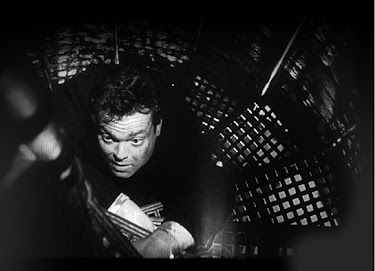


_poster.jpg)


