Directed by: Joseph H. Lewis
Written by: Philip Yordan (writer)
Starring: Cornel Wilde, Richard Conte, Brian Donlevy, Jean Wallace, Robert Middleton, Lee Van Cleef, Earl Holliman, Helen Walker, Ted de Corsia, Helene Stanton
WARNING: Plot and/or ending details follow!!! [Paragraph 3 only]
New York is a big city, and it's ruled, not by the democratically-elected politician, nor by the Chief of Police, but by the Crime Boss. Contemptible but untouchable, Mr. Brown rules the sprawling metropolis like a tyrant reigning over his kingdom, flaunting his power and success extravagantly and fearlessly, secure with the knowledge that the authorities can't lay a finger on him. Richard Conte's performance in The Big Combo (1955) is the key to the film's success. Though comparatively short in stature, Mr. Brown is nonetheless an intimidating figure, through both his complete confidence in his own eminence, and his denigration towards all those who are below him. With that charisma that apparently comes only to Italian-Americans, Mr. Brown (who, for whatever reason, frequently reminded me of Martin Scorsese) lays down the rules for determining the hierarchy of power: "Hate! Hate is the word, Benny! Hate the man that tries to beat you. Kill 'em, Benny! Kill 'em! Hate him till you see red, and you'll come out winning the big money, and the girls will come tumblin' after."
 The film's plot, of an honest cop trying to bring down a titan of organised crime, is not unique; the most readily-recalled example would be Brian DePalma's The Untouchables (1987), but precursors certainly exist. Lt. Leonard Diamond (Cornel Wilde) is such an honest cop, almost obsessive in his bid to bring down Mr. Brown, though his fanaticism could just as easily be explained by his lust for the crime boss' abused girlfriend, Susan Lowell (Jean Wallace). Diamond is supposed to be the film's driving-force, but he's too dogmatic to make an interesting hero. Unlike the countless flawed anti-heroes who have made so many film noirs memorable – take Marlowe, or Spade, or Hammer, for instance – Diamond's only flaw appears to be that he's a workaholic. Mr. Brown contemptuously describes the detective as "righteous," the word spoken with such derision that he might as well have spit on him. Indeed, so lowly is his opinion of law enforcement that Mr. Brown stubbornly refuses even to address Diamond directly, sardonically issuing threats in the third-person.
 I suppose it wouldn't be entirely accurate to describe Diamond as being a complete saint. After all, we must consider his part-time girlfriend Rita (Helene Stanton), whom he treats like a "pair of gloves," offering his affection only when his life seems particularly hopeless. Ultimately, Rita is assassinated in a case of mistaken identity, and her death gives the detective added incentive to bring down Mr. Brown. This character subplot is obviously an attempt to make Diamond appear more of an anti-hero, but it's a thin attempt, and Wilde's character is best viewed as an obligatory vehicle of moral and legal justice. It is the strong performances of Conte and Brian Donlevy (as Mr. Brown's resentful second-in-command) that really make the film, in addition to the imaginative visuals. Cinematographer John Alton here constructs some of film noir's most iconic images, including the fog-swept airport finale that deliberately diverts the ending of Casablanca (1942) into darker territory. The inspired stylistic decision to show Joe McClure's death without audio also inspired Sam Mendes' rainy shoot-out in Road to Perdition (2002).
8/10
Currently my #6 film of 1955:
1) Du rififi chez les hommes {Rififi} (Jules Dassin) *
2) The Ladykillers (Alexander Mackendrick)
3) Bad Day at Black Rock (John Sturges)
4) Kiss Me Deadly (Robert Aldrich) *
5) Les Diaboliques (Henri-Georges Clouzot)
6) The Big Combo (Joseph H. Lewis) *
7) Nuit et brouillard {Night and Fog} (Alain Resnais)
8) Rebel Without a Cause (Nicholas Ray)
9) The Night of the Hunter (Charles Laughton) *
10) A Kid for Two Farthings (Carol Reed)

 The film starts off in the classic noir style: told in flashback, the story opens with popular author Richard Harland (Cornel Wilde), who meets an alluring woman, Ellen Berent (Tierney), on a train. Ellen quickly charms Richard with her dazzling looks and strong personality; soon, despite her own engagement to a prominent lawyer (Vincent Price), she has proposed their marriage, an offer he finds impossible to refuse. Here, Leave Her to Heaven takes a distinct turn in storytelling approach, abruptly shifting its attention to Ellen's perspective, at which point we begin to recognise that perhaps she isn't as lovely as her new husband has been led to believe. The new couple move to Richard's secluded lakeside lodge, where they must also care for his crippled younger brother, Danny (Darryl Hickman, giving one of those "excited boy scout" child performances that were popular in the 1940s). As the weeks go by, Ellen's near-obsessive love for Richard begins to brood anger, hatred and jealousy, culminating in the cruelest of acts.
 Tierney's character initially elicits an amount of sympathy, especially given Richard's apparent inability to recognise his wife's desperate need for privacy and intimacy in their relationship. However, it doesn't take long before her behaviour, fuelled by suspicion and paranoia, becomes entirely contemptible, and there's no longer any trace of the charming enchantress we saw in Laura (1944). Ellen's psychosis is an intriguing one: she was obviously obsessed with love for her own father – what Freud called "feminine Oedipus attitude," or Electra complex – and, following his death, subsequently fell in love with Richard, who bears a remarkable resemblance to him. Such is her passion for her father, through Richard, that she cannot bear to share him with anybody; thus, her mania stems from the simple notion that "she loves too much." Ellen's murders are shocking in their own low-key simplicity, and Tierney, who received her only Oscar nomination for the role, carries out her evils with an icily-impassive face. But, geez, even this chilling portrayal can't make me stop loving her.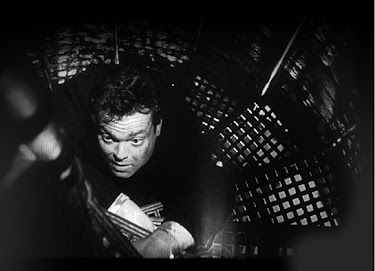


_poster.jpg)


