Directed by: Jules Dassin
Written by: A.I. Bezzerides (novel & screenplay)
Starring: Richard Conte, Valentina Cortese, Lee J. Cobb, Barbara Lawrence, Jack Oakie, Millard Mitchell, Joseph Pevney
WARNING: Plot and/or ending details may follow!!! [Paragraph 3 only]
Nick Garcos (Richard Conte) returns from a round-the-world engagement to a home that, at first glance, typifies the ideal American household. His father's working-class singing voice booms across the backyard; his mother fussily busies herself with the daily chores; his girlfriend Polly (Barbara Lawrence) bursts jubilantly into the room, embracing him in a passionate, sensuous kiss. But looks can be deceiving: a well-intended gift of Chinese slippers betrays a recent family tragedy; Polly's disappointed response to another gift hints at a fractured romance, a relationship borne not from love but the love of money. The family's facade of happiness is exposed as a sham, and it's the peeling back of this superficial skin with which Jules Dassin's Thieves' Highway (1949) is concerned. A seemingly-innocuous industry, that of fresh fruit cartage and wholesale, is shown to wallow in depravity, thuggery and callous opportunism. In this way, the film might be considered a companion piece to the director's previous effort, The Naked City (1948), which similarly exposed gruelling drama within the confines of the audiences' daily lives.
 Richard Conte was one of the most interesting leading men of his era. His big-shot crime boss in The Big Combo (1955) might be the decade's most charismatic villain, but he could also play the resolute hero, as in Preminger's Whirlpool (1949). To Thieves' Highway he brings a cocky self-assurance, the sort of fearless conviction that's bound to blow up in one's face eventually. Lee J. Cobb's conniving fruit wholesaler, Mike Figlia, is a small-time crook, but one who invokes the viewer's contempt through his ruthlessly-capitalist exploitation of the humble working-class American. Only the females aren't as memorably drawn: Barbara Lawrence's Polly is rather abruptly discarded as a self-seeking gold-digger, as though only to allow for a romance with possible prostitute Rica (Valentina Cortesa), who grows a heart of gold. Thieves' Highway no doubt inspired Henri-Georges Clouzot's nail-biting The Wages of Fear (1953), another classic tale of trucking peril, but unfortunately it itself lacks the French director's gritty cynicism, or at least a degree of pessimism as absolute as Clouzot's.
 This slackening of tone is seen most tellingly in the film's dramatic climax, a confrontation between Garcos and Figlia. The sequence doesn't work because it's conflicted between two opposing moral viewpoints. In one sense, Dassin appears to advocate Garcos' vigilante action in subjecting Figlia to a physical beating, since he successfully reclaims his stolen payments and achieves some degree of mental closure regarding his father's crippling. However, at this moment, as Garcos collapses onto the bench in exhaustion, policemen enter the diner and arrest Figlia for his crimes – but not before one officer sternly wags his finger at Garcos for taking the law into his own hands. To have an excellent film intruded upon by such an awkward, juvenile moral lesson is bad enough, but the film could have gotten across the same message in a more powerful manner. As the police stormed into the diner, my blood had suddenly run cold with the chilling thought: what if Figlia is dead? Out of pure bloody-minded pride, a good man would have been condemned for life, the ultimate testament that vigilantism is not the answer.
Richard Conte was one of the most interesting leading men of his era. His big-shot crime boss in The Big Combo (1955) might be the decade's most charismatic villain, but he could also play the resolute hero, as in Preminger's Whirlpool (1949). To Thieves' Highway he brings a cocky self-assurance, the sort of fearless conviction that's bound to blow up in one's face eventually. Lee J. Cobb's conniving fruit wholesaler, Mike Figlia, is a small-time crook, but one who invokes the viewer's contempt through his ruthlessly-capitalist exploitation of the humble working-class American. Only the females aren't as memorably drawn: Barbara Lawrence's Polly is rather abruptly discarded as a self-seeking gold-digger, as though only to allow for a romance with possible prostitute Rica (Valentina Cortesa), who grows a heart of gold. Thieves' Highway no doubt inspired Henri-Georges Clouzot's nail-biting The Wages of Fear (1953), another classic tale of trucking peril, but unfortunately it itself lacks the French director's gritty cynicism, or at least a degree of pessimism as absolute as Clouzot's.This slackening of tone is seen most tellingly in the film's dramatic climax, a confrontation between Garcos and Figlia. The sequence doesn't work because it's conflicted between two opposing moral viewpoints. In one sense, Dassin appears to advocate Garcos' vigilante action in subjecting Figlia to a physical beating, since he successfully reclaims his stolen payments and achieves some degree of mental closure regarding his father's crippling. However, at this moment, as Garcos collapses onto the bench in exhaustion, policemen enter the diner and arrest Figlia for his crimes – but not before one officer sternly wags his finger at Garcos for taking the law into his own hands. To have an excellent film intruded upon by such an awkward, juvenile moral lesson is bad enough, but the film could have gotten across the same message in a more powerful manner. As the police stormed into the diner, my blood had suddenly run cold with the chilling thought: what if Figlia is dead? Out of pure bloody-minded pride, a good man would have been condemned for life, the ultimate testament that vigilantism is not the answer.7.5/10
Currently my #6 film of 1949:
1) The Third Man (Carol Reed)
2) White Heat (Raoul Walsh)
3) Kind Hearts and Coronets (Robert Hamer)
4) The Set-up (Robert Wise)
5) A Run for Your Money (Charles Frend)
6) Thieves’ Highway (Jules Dassin)
7) Nora inu {Stray Dog} (Akira Kurosawa)
8) The Big Steal (Don Siegel)
9) She Wore a Yellow Ribbon (John Ford)
10) Under Capricorn (Alfred Hitchcock)
2) White Heat (Raoul Walsh)
3) Kind Hearts and Coronets (Robert Hamer)
4) The Set-up (Robert Wise)
5) A Run for Your Money (Charles Frend)
6) Thieves’ Highway (Jules Dassin)
7) Nora inu {Stray Dog} (Akira Kurosawa)
8) The Big Steal (Don Siegel)
9) She Wore a Yellow Ribbon (John Ford)
10) Under Capricorn (Alfred Hitchcock)

 Gene Tierney was, of course, one of the most stunning actresses to grace the silver screen, but she was also among the most misused. When utilised as a traditional, innocent damsel-in-distress, Tierney's acting is usually dependable without being particularly memorable. However, at least two directors realised that she was at her best when her character's intentions are either ambiguous {see
  Whirlpool is strongest in its middle-act, with Tierney as a wrong-accused innocent for whom every piece of evidence points to her guilt. However, since the story's conclusion is ultimately never in any doubt, much of the film's second half feels as though it is merely going through the motions. I think it would have been more effective had the audience been uncertain of Ann's innocence, just as she herself is unsure. Alfred Hitchcock did something similar just a few years earlier in Spellbound (1945), casting doubt on the virtuousness of Gregory Peck as he is hunted for a crime of which he has no memory. Hinting at the tantalising possibility that Tierney is a murderer would undoubtedly have brought out the actresses' talents, the audience meanwhile tentative about whose story they can trust. For fans of 1940s psychological thrillers, in the same vein as
  The film's plot, of an honest cop trying to bring down a titan of organised crime, is not unique; the most readily-recalled example would be Brian DePalma's The Untouchables (1987), but precursors certainly exist. Lt. Leonard Diamond (Cornel Wilde) is such an honest cop, almost obsessive in his bid to bring down Mr. Brown, though his fanaticism could just as easily be explained by his lust for the crime boss' abused girlfriend, Susan Lowell (Jean Wallace). Diamond is supposed to be the film's driving-force, but he's too dogmatic to make an interesting hero. Unlike the countless flawed anti-heroes who have made so many film noirs memorable – take Marlowe, or Spade, or Hammer, for instance – Diamond's only flaw appears to be that he's a workaholic. Mr. Brown contemptuously describes the detective as "righteous," the word spoken with such derision that he might as well have spit on him. Indeed, so lowly is his opinion of law enforcement that Mr. Brown stubbornly refuses even to address Diamond directly, sardonically issuing threats in the third-person.
 I suppose it wouldn't be entirely accurate to describe Diamond as being a complete saint. After all, we must consider his part-time girlfriend Rita (Helene Stanton), whom he treats like a "pair of gloves," offering his affection only when his life seems particularly hopeless. Ultimately, Rita is assassinated in a case of mistaken identity, and her death gives the detective added incentive to bring down Mr. Brown. This character subplot is obviously an attempt to make Diamond appear more of an anti-hero, but it's a thin attempt, and Wilde's character is best viewed as an obligatory vehicle of moral and legal justice. It is the strong performances of Conte and Brian Donlevy (as Mr. Brown's resentful second-in-command) that really make the film, in addition to the imaginative visuals. Cinematographer John Alton here constructs some of film noir's most iconic images, including the fog-swept airport finale that deliberately diverts the ending of Casablanca (1942) into darker territory. The inspired stylistic decision to show Joe McClure's death without audio also inspired Sam Mendes' rainy shoot-out in Road to Perdition (2002).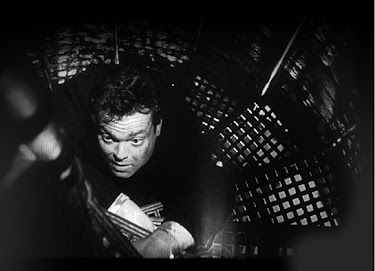


_poster.jpg)


