Directed by: Orson Welles
Written by: Orson Welles (story & screenplay)
Starring: Orson Welles, Robert Arden, Michael Redgrave, Patricia Medina, Akim Tamiroff, Mischa Auer, Paola Mori, Katina Paxinou, Grégoire Aslan, Peter van Eyck, Suzanne Flon
 WARNING: Plot and/or ending details may follow!!! [Paragraph 3 Only]
If one must choose a film with which to compare Mr. Arkadin, it would probably be Carol Reed's The Third Man (1949). Both pictures transplant a familiar film noir plot into a European setting, and an eccentric camera captures the personality of the exotic locales and their inhabitants. Both, of course, also starred Orson Welles in a prominent role, and playing analogous characters. In Reed's film, Harry Lime is a smug, boyish racketeer whose thirst for ill-gotten profits takes priority over the faceless victims of his black-market crimes. Gregory Arkadin might be considered an extension of Lime's character, had he emerged unscathed from the Vienna sewers and lived years more. Arkadin is undoubtedly a criminal, but one whose incredible success has pushed him beyond such a characterisation. Despite having apparently eluded his youthful years in petty crime (after erasing his former identity, much as Lime attempted), Arkadin remains plagued by the shame of his past, unwilling to acknowledge that he is just as contemptible now as he ever was.
Despite the thematic influence of American cinema, Welles' direction, stylistically, more closely resembles the work of European artists like Federico Fellini. His dynamic camera-work and editing has an air of improvisation, and a certain flamboyance that might seem overindulgent if it weren't so brilliantly effortless. The film's most interesting sequence is an early costume ball in which guests are hidden behind grotesque masks, whose massive features crowd the frame like the creatures from Maurice Sendak's "Where the Wild Things Are." Though it is Welles' presence that dominates the screen, Robert Arden is an intriguing noir protagonist: Guy Van Stratten is a small-time smuggler (once again drawing a parallel with Harry Lime) who epitomises the petty crook that Arkadin once was. Infatuated with nothing but money and self- preservation, Stratten continually exploits the affections of girlfriend Mily (Patricia Medina) and Arkadin's daughter Raina (Paola Mori). He destroys the lives of both women, and, unremorsefully, manages to save his own neck. Gregory Arkadin isn't the only villain on this cluttered continent.
8/10
Currently my #5 film of 1955:
1) Du rififi chez les hommes {Rififi} (Jules Dassin) *
2) The Ladykillers (Alexander Mackendrick)
3) Bad Day at Black Rock (John Sturges)
4) Kiss Me Deadly (Robert Aldrich) *
5) Mr. Arkadin {Confidential Report} (Orson Welles) *
6) The Big Combo (Joseph H. Lewis) *
7) Les Diaboliques (Henri-Georges Clouzot) *
8) Nuit et brouillard {Night and Fog} (Alain Resnais)
9) Rebel Without a Cause (Nicholas Ray)
10) The Night of the Hunter (Charles Laughton) *
2) The Ladykillers (Alexander Mackendrick)
3) Bad Day at Black Rock (John Sturges)
4) Kiss Me Deadly (Robert Aldrich) *
5) Mr. Arkadin {Confidential Report} (Orson Welles) *
6) The Big Combo (Joseph H. Lewis) *
7) Les Diaboliques (Henri-Georges Clouzot) *
8) Nuit et brouillard {Night and Fog} (Alain Resnais)
9) Rebel Without a Cause (Nicholas Ray)
10) The Night of the Hunter (Charles Laughton) *

 The film's plot, of an honest cop trying to bring down a titan of organised crime, is not unique; the most readily-recalled example would be Brian DePalma's The Untouchables (1987), but precursors certainly exist. Lt. Leonard Diamond (Cornel Wilde) is such an honest cop, almost obsessive in his bid to bring down Mr. Brown, though his fanaticism could just as easily be explained by his lust for the crime boss' abused girlfriend, Susan Lowell (Jean Wallace). Diamond is supposed to be the film's driving-force, but he's too dogmatic to make an interesting hero. Unlike the countless flawed anti-heroes who have made so many film noirs memorable – take Marlowe, or Spade, or Hammer, for instance – Diamond's only flaw appears to be that he's a workaholic. Mr. Brown contemptuously describes the detective as "righteous," the word spoken with such derision that he might as well have spit on him. Indeed, so lowly is his opinion of law enforcement that Mr. Brown stubbornly refuses even to address Diamond directly, sardonically issuing threats in the third-person.
 I suppose it wouldn't be entirely accurate to describe Diamond as being a complete saint. After all, we must consider his part-time girlfriend Rita (Helene Stanton), whom he treats like a "pair of gloves," offering his affection only when his life seems particularly hopeless. Ultimately, Rita is assassinated in a case of mistaken identity, and her death gives the detective added incentive to bring down Mr. Brown. This character subplot is obviously an attempt to make Diamond appear more of an anti-hero, but it's a thin attempt, and Wilde's character is best viewed as an obligatory vehicle of moral and legal justice. It is the strong performances of Conte and Brian Donlevy (as Mr. Brown's resentful second-in-command) that really make the film, in addition to the imaginative visuals. Cinematographer John Alton here constructs some of film noir's most iconic images, including the fog-swept airport finale that deliberately diverts the ending of Casablanca (1942) into darker territory. The inspired stylistic decision to show Joe McClure's death without audio also inspired Sam Mendes' rainy shoot-out in Road to Perdition (2002).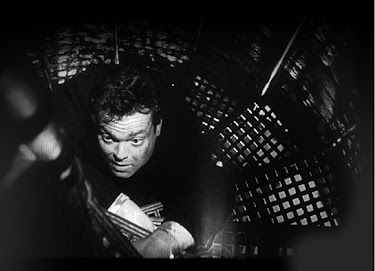


_poster.jpg)


