Directed by: Otto Preminger
Written by: Marty Holland (novel), Harry Kleiner (writing)
Starring: Dana Andrews, Alice Faye, Linda Darnell, Charles Bickford, Anne Revere, John Carradine
WARNING: Plot and/or ending details may follow!!!
With Laura (1944) and Where the Sidewalk Ends (1950), director Otto Preminger and actor Dana Andrews collaborated to produce two of the great American film noirs. Fallen Angel (1945) also features this winning combination, but unfortunately lacks something more crucial: conviction. Eric Stanton (Andrews) is the perfect noir anti-hero, an unabashed shyster with a knack for opportunism. After stranding himself in a small American town with a dollar in his pocket, Stanton falls for Stella (Linda Darnell), a vivacious young waitress who'll "befriend" any man who can offer her financial security. Stanton claims that he wants to marry Stella, but he's obviously driven by lust, and his hunger leads him to seek money through dubious means – in this case, by wooing and marrying the spinsterish June (Alice Faye). Where Preminger fumbles is in his unwillingness to punish Stanton. Instead, the irresponsibly- flirtatious Stella is murdered, and our hero's innocence – never really doubted by the audience – distracts from the character's own moral crimes.

The film, at least, is thick with atmosphere. The small-town setting creates a distinct sense of claustrophobia, as though one can't run far enough to escape the watchful eyes of the local residents. Dana Andrews, as always, is excellent in the lead role. Linda Darnell exudes a trashy but undeniably voluptuous sensuality; she's a more openly sexual character than Gene Tierney's Laura, and perhaps more along the lines of Tierney in The Shanghai Gesture (1941) or Jean Peters in Pickup on South Street (1953). The characters played by Alice Faye and Anne Revere are underdeveloped and mostly uninteresting; their innocent, righteous personalities feel as though they should have no place in the film noir style. Charles Bickford, however, is very entertaining as a cocky and sadistic retired detective charged with solving Stella's murder. For the sizzling chemistry of Andrews and Darnell, Fallen Angel is a worthy enough noir thriller, but the director and star have done better, both together and with others.
6.5/10
Currently my #10 film of 1945:
1) The Lost Weekend (Billy Wilder) *
2) Spellbound (Alfred Hitchcock) *
3) Brief Encounter (David Lean)
4) 'I Know Where I'm Going!' (Michael Powell, Emeric Pressburger)
5) Perfect Strangers (Alexander Korda)
6) Leave Her to Heaven (John M. Stahl) *
7) Scarlet Street (Fritz Lang) *
8) And Then There Were None (René Clair)
9) Roma, città aperta {Rome, Open City} (Roberto Rossellini)
10) Fallen Angel (Otto Preminger) *

 Where the Sidewalk Ends was the only film to reunite Dana Andrews, Gene Tierney and director Otto Preminger after the superb
  The tension, as Dixon attempts to cover up his crime, is absolutely riveting – certainly among the most suspenseful sequences of its era – though I feel that the situation still wasn't exploited to its full potential. The taxi driver is the only person who could have decisively identified Dixon as the perpetrator, but Preminger hurriedly skims over the moment when he passes Dixon on the stairs. Had the witness been brought in as Dixon was re-enacting his own movements outside the apartment entrance, we could have had some genuine fireworks. And why, for that matter, couldn't the taxi driver's testimony have immediately absolved Jiggs Taylor (Tom Tully) from suspicion of murder? Niggling inconsistencies such as these tarnish an otherwise excellent screenplay from Ben Hecht, who infuses his gritty criminal underworld with hard-hitting cops and wise-cracking felons. Andrews' seething and implosive law-enforcer, tormented by rage and remorse, has rarely been done better, at least the equal of Robert Ryan in Nicholas Ray's On Dangerous Ground (1952).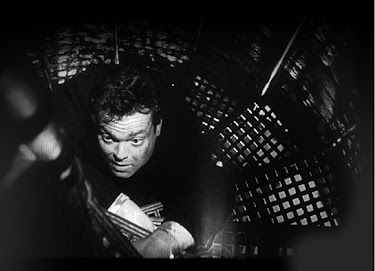


_poster.jpg)


