Directed by: John Boulting
Written by: Graham Greene (novel & screenplay), Terrence Ratigan (writer)
Starring: Richard Attenborough, Carol Marsh, Hermione Baddeley, William Hartnell, Harcourt Williams, Wylie Watson
In John Boulting's adaptation of a Graham Greene novel, Richard Attenborough plays small-time gang-leader Pinkie Brown, a young man with a rough temper and a paranoid mean-streak. After he murders a police informer, Pinkie happens upon a young waitress (Carol Marsh) who could shatter his alibi if she wanted to. Unable to silence her without risking arrest, Pinkie instead tries to seduce the girl, who naively falls head over heels for the man who'd like to put a bullet in her.
Greene's trademark wryness is present in a tense opening act that sees a desperate newspaper employee (hired as Kolley Kibber, a variation of the Lobby Lud character) pursued through the streets of Brighton. Rarely have bustling crowds of people felt so ominous: how can this man hope to escape detection if, in a sardonic twist, an entire readership is looking out for him? Pinkie eventually murders the man during a carnival horror ride, escaping into the throngs of oblivious day-trippers. The man in which such a heinous crime is swallowed by the clamour of everyday life recalls Dassins The Naked City (1948) and that wonderful reverse dolly shot in Hitchcock's Frenzy (1972).


This sequence is one of several – including the climax upon a foggy ocean pier – whose sheer atmosphere is intense enough to rival the very best noir efforts of Jules Dassin {Night and the City (1950)} and Carol Reed {Odd Man Out (1947); The Third Man (1949)}. Unfortunately, unlike these better films, Brighton Rock (1947) lacks a consistent tone. Director Robert Boulton is skillful at building a strong atmosphere, but intermittent interruptions from Hermione Baddeley's brassy amateur sleuth (accompanied by her own jaunty theme tune) shift the mood from that of a grim British noir to a frivolous Miss Marple outing.
Though Richard Attenborough is a small, unintimidating actor, he somehow uses his slight stature to his advantage. Like a wily mutt, his Pinkie Brown has a ferocious bark, and a bite to match. In stories of this sort, it is typical for the villain to be softened, if only slightly, by the affections of a pretty lady. Nothing of the sort happens here. Pinkie, whose sexual urges are seemingly exhausted in his lust for power, woos and weds waitress Rose purely as an exercise in self-preservation. The young woman's devotion to such a cold-blooded crook is pathetic and heartbreaking, a tragic metaphor for thousands of women trapped in loveless and abusive marital unions.
7/10
Currently my #10 film of 1947:
1) Odd Man Out (Carol Reed) *
2) The Ghost and Mrs. Muir (Joseph L. Mankiewicz)
3) Monsieur Verdoux (Charles Chaplin)
4) Out of the Past (Jacques Tourneur) *
5) Dark Passage (Delmer Daves) *
6) The Lady from Shanghai (Orson Welles) *
7) They Won’t Believe Me (Irving Pichel) *
8) The Web (Michael Gordon) *
9) The Fugitive (John Ford, Emilio Fernández)
10) Brighton Rock (John Boulting) *


 Philip Marlowe is the sort of role that Robert Mitchum would have nailed in the 1950s, when he always seemed to feel old and weary without actually looking it. Nevertheless – though he lacks the cocky vigour of Dick Powell, or the invincibility of Humphrey Bogart – the aging Mitchum does communicate what is perhaps Marlowe's most defining characteristic: that of a disillusioned, world-weary private dick looking for something in this world, anything, worth fighting for. In his latest case, Marlowe is hired by fearless lug Moose Malloy (Jack O'Halloran) to find his girlfriend Velma, who vanished while Malloy was serving a prison sentence. As always, what had initially seemed a straightforward assignment soon gets Marlowe embroiled in a complex patchwork of deceits, murders and double-crossings. Crucial to the mystery is Charlotte Rampling (emulating Lauren Bacall) as the adulterous wife of an old millionaire, and Oscar-nominated Sylvia Myles as an alcoholic performance artist. Also look out for small roles from Harry Dean Stanton as Det. Rolfe, and Sylvester Stallone as a lustful thug.
 Farewell, My Lovely does a fine job of translating Chandler's pessimistic vision of urban decay and human depravity. The 1940s adaptations are, of course, superbly entertaining, but most of them – particularly The Big Sleep (1946) and
  Foster's film opens in a pub, as the drunken patrons are shuffled into the street at closing time. There sits Bill Saunders (Lancaster) at the bar, lonely and brooding, so utterly distanced from society that he refuses to follow his fellow drinkers out the door. When the publican becomes forceful, Bill suddenly jerks into action, striking out with a heavy fist that leaves his aggressor dead on the floor. "Chum, you've been and gone and done it," remarks one stunned onlooker (Newton) gravely; "he's dead. You've killed him." This is what film noir is all about: that fundamental moment when there's no turning back. After a thrilling chase through the London streets (though I notice that the characters still drive left-handed vehicles), Bill finds refuge in the apartment of Jane Wharton (Fontaine), whose unexpected compassion leads him to seek a relationship with her. At this point, the film quickly and inexplicably forgets that Bill is a fugitive wanted for murder. Or, perhaps more accurately, it waits for us to forget.
 Only after Bill Saunders has reestablished his place in society does his past rear its ugly head, in the form of Robert Newton's grotesquely cavalier black-market fraudster. This isn't the first time in Lancaster's career that his character's past had inescapably returned to haunt him: in Siodmak's
  Despite a slow first half, in which Fields' typical espionage duties are introduced via a lot of silent waiting, The Thief picks up substantially once the American authorities catch wind of his crimes. Rouse cultivates some truly thumping suspense sequences, including a magnificent stairway pursuit up the then-tallest building in the world, the Empire State. This breathless flight from the 88th floor observatory to the 102nd floor, and beyond, serves as a convenient allegory for Fields' Communist involvement. As an FBI agent rushes in pursuit, Milland's character tries repeatedly to escape through service doors on each floor, only to find them locked each time. Throughout the film, despite wishing to abandon his treasonous practices, Fields consistently finds his path to freedom blocked, his only option to continue what he's been doing, further implicating himself with each staircase he ascends. When inevitably cornered high above New York City, ironically defenseless at the pinnacle of human achievement, Fields desperately lashes out at his aggressor, and does the unthinkable.
 In spite of my reservations that only a low-budget film could get away with such an anachronistic style, The Thief does, in fact, boast excellent production values. Sam Leavitt's cinematography is graceful but with an edge of documentary-realism. I particularly enjoyed the lurid confusion of Fields' nervous breakdown (perhaps a nod to Wilder's The Lost Weekend (1945)), with an increasingly-claustrophobic Milland filmed from above like an insignificant pawn, as specks of blood appear to permeate the walls. Despite his Oscar, Ray Milland is one of his generation's most underrated leading men, and he handles an exceedingly difficult role with poise and empathy: just watch Fields' pang of guilt every time he glances at the Capitol Dome, a symbol of American nationalism. Despite its sympathetic portrayal of a Commie spy, the film is nevertheless patriotic, as it must have been at this time. Indeed, Fields' ultimate decision to confess everything to the FBI comes not with the realisation that he is a bad person, but the realisation that he is a bad American.
 I don't want to describe this film as exploitation. It certainly is exploitative to a huge degree – Fuller, for example, wrings every ounce of empathy from the poor crippled kids – but somehow there's a sense of sincerity in how he tells the story, as though he really does believe in the possibility of redemption. Tough, independent-minded prostitute Kelly (Towers) arrives in a new town, sleeps with the police captain (Anthony Eisley), and then decides to leave her shameful past behind forever, somehow securing a job at the local children's hospital. Captain Griff is immediately suspicious of Kelly's motivations, hypocritically believing that she'll only pollute his home town, but wealthy local benefactor J.L. Grant (Michael Dante) falls in love with her. When it came to women, Fuller appears to have admired the lowly kind: Constance Towers in Shock Corridor (1963) was a stripper, Towers in The Naked Kiss was a prostitute, and Jean Peters in
  Especially in its final act, The Naked Kiss has strong elements of film noir – substituting the usual male protagonist for a woman, of course – but there's also high degrees of melodrama, exploitation, and pulpy, B-movie schlock. Fuller's ultimate message appears to be double- edged. A prominent noir motif concerns the sheer hopelessness of redemption: however hard one tries to evade their past, a man's former misdeeds will always return to haunt them. This fate does, indeed, confront Fuller's heroine, but he leaves a light at the end of the tunnel, arguably dampening the full brunt of the film's ending. Perhaps the more potently-noirish message to be gleaned from The Naked Kiss is that society is rotten: not just the mistreated prostitutes and tyrannical pimps, but the hypocritical police captain, the prejudiced townsfolk, the philanthropist with an ulterior motive in funding a children's hospital. Towers' prostitute crosses to the "respectable" side of society's fence, but finds that corruption has already pervaded to its highest levels.
 Bob Regan (O'Brien) is a two-bit lawyer with the bluster of a high-price attorney. In his first scene, Regan sidles through a busy reception office, offends a secretary (Raines) with some surprisingly-forward sexual banter, before busting in on millionaire businessman Andrew Colby (Price) and demanding the sum of exactly $68.72. Impressed with Regan's passion for the job, Colby hires him for a high-paying, two-week stint as a personal bodyguard. However, when Regan guns down Leopold Kroner (Fritz Leiber), a former associate of Colby's who was recently released from prison, he finds himself in hot water with detective Damico (Bendix), who scents murder. Desperate to clear his name, Regan begins to investigate Colby's shady dealings, reluctantly exploiting the affections of secretary Noel Faraday for information. Meanwhile, Vincent Price's articulate, calculating Colby plots the coup de grâce of his high-stakes crime spree, culminating in a murder frame-up that initially seems so airtight that I couldn't imagine any way for our hero to get out of it.
 Though it doesn't necessarily offer any new material for the film noir lexicon, nor does The Web feel contrived. The romance between O'Brien and Raines could easily have been squandered with melodrama, but the film always keeps their relationship edgy. Noel's affections, for one, are clearly split between Regan and Colby, whose association with her visibly extends beyond the professional realm ("I recognise him when I see him"). Regan himself, while essentially good-hearted, has a clumsy crudeness about him where women are concerned, in contrast with Colby, who always knows what to say and how to say it. There's something subtly fascinating about Price's 1940s performances; it has to do with how he speaks. When his character is telling an untruth, he does so in a manner that, to us, reeks of deception, and yet we can perfectly understand why the film's characters – say, a policeman – swallow the lie whole. He toes a fine line, and still manages to suspend the audience's disbelief. Maybe that's why Price got away with starring in so many bad movies.
 Most noir enthusiasts would, I'm sure, agree that the modern heist thriller was basically born with John Huston's The Asphalt Jungle (1950). But it wasn't alone for long. Just one month after its release, Richard Fleischer released his own heist flick, a low-budget B-movie with no star power (unless you count supporting player Charles McGraw, who was no stranger to film noir – see
 Pat O'Brien is typically known for playing priests, the level-headed foil for James Cagney's explosive gangster. In other words, he's usually the least-interesting character in the film. Crack-Up (1946) marks a welcome change-of-pace for the actor. No longer is O'Brien the calm, collected cleric, but a confused art critic at the end of his rope, doubting his own sanity as he battles murder and conspiracy. He perhaps isn't perfect for the role – the film's lurid moments would have been even more lurid had the lead actor been able to act more deranged – but O'Brien receives good supporting back-up from Claire Trevor, Herbert Marshall and Ray Collins. Director Irving Reis (best known for his "Falcon" series, though he also co-directed the annoyingly manipulative Hitler's Children (1943) with Edward Dmytryk) does well to develop the film's mood, not afraid to dabble in a bit of surrealism to help translate the mental confusion and degradation of his main protagonist. There's also a little Freudian psychoanalysis in there, as was popular at the time, but the distraction it causes to the story is only an afterthought.
 Olivia de Havilland excels in dual roles as Terry and Ruth Collins, twin sisters who might just have pulled off the perfect crime, even if only one knows it. When the sisters' shared boyfriend is murdered in cold blood, two witnesses place one of the twins at the scene of the crime, while three more provide a solid alibi for the other. The only problem is that nobody can tell the pair apart. A police detective (Thomas Mitchell) is torn apart by the case: how can he charge either woman with murder if he can't decide which of the sisters is, in fact, a murderess? Only through Hollywood's good friend Dr. Freud can the true nature of the crime be exposed. The distinction between the "good" and "insane" twin is clearly drawn early in the film, with de Havilland playing one sister as a cocky dominator, and the other as more softly-spoken, with eyes always downcast and hands delicately clasped together. Clarifying the dual relationship is some convenient symbolism used in the film's climax: Terry is dressed in black, and Ruth in white.
 Convincing optical effects and the use of body doubles are employed successfully to create the illusion of two Olivia de Havillands. The actress does well as both characters, perhaps channelling her dislike of sister Joan Fontaine to portray the snarling, psychotic and homicidally jealous "evil sister." Though they start out perfectly alike, it doesn't take long for the two Collins sisters to develop distinct personalities in the eyes of the audience, and Siodmak should quickly have dispensed with the obvious name-tags (either a necklace or a single letter pin) added to ensure that the audience could follow who was who. Perhaps misguidedly, the presence of twins is at first played largely for laughs, with composer Dimitri Tiomkin keeping the atmosphere surprisingly light and fluffy. Fortunately, however, the mood darkens substantially in the film's second half, as the hatred simmering slowly within the darker twin threatens to spill over into reality. Though the unlikely psychology behind The Dark Mirror tests one's credulity at regular intervals, the strong acting and unique storyline make this one worth seeking out.
 According to the opening credits, Macao was directed by Josef von Sternberg. In actuality, producer Howard Hughes dismissed Sternberg before production wrapped up, and so the film was completed by an uncredited Nicholas Ray. Audiences have always loved to see their favourite stars dispatched to exotic locations – however short distance they were required to travel from the studio back-lot – and the obscure Asian peninsula of Macao adds a spark of Oriental charm to an already-outlandish locale. This is a city where dangerous criminals take sanctuary and open seedy gambling joints, where mysterious Asian henchmen kill their victims with knives rather than guns. Normal societal formalities hold no sway here: Mitchum gets a luscious kiss out of his leading lady within a minute of their meeting, and, incidentally, she gets his wallet. That the screenplay is completely predictable becomes irrelevant next to the strong characterisations and seedy, mysterious atmosphere. This being my first Sternberg film, I'm unsure of his particular directing style, but the dark foot-chases along the sleazy Macao docks struck me as being characteristic of Nicholas Ray's work.
 Though Mitchum and Russell carry the film pretty well – and, indeed, are the only reason for the film's existence – an unfortunately-underused supporting cast also does a good job. William Bendix, playing a likable character for once, is a friendly travelling salesman to whom there may be more than meets the eye. Brad Dexter is serviceable as the primary villain, but he's not particularly sinister or intimidating, and his spur-of-the-moment decision to leave the Three-Mile Limit, especially after learning of a plot to capture him, seems utterly contrived. Gloria Grahame (Ray's then-wife, though not for much longer) has a disappointingly-brief role as the villain's shunted lover; early in the film, she and Russell exchange glares than communicate pure mutual contempt. Overall, despite an all-too-familiar storyline, the Oriental-flavoured setting and enjoyable performances make for a film with a fair amount of suspense and intrigue, with just enough laconic humour to keep the story moving along nicely {Mitchum himself reportedly wrote a few scenes to bridge the otherwise-muddled screenplay}. If this one ever comes up on the TV schedule, it's worth a gander.
 The film starts off in the classic noir style: told in flashback, the story opens with popular author Richard Harland (Cornel Wilde), who meets an alluring woman, Ellen Berent (Tierney), on a train. Ellen quickly charms Richard with her dazzling looks and strong personality; soon, despite her own engagement to a prominent lawyer (Vincent Price), she has proposed their marriage, an offer he finds impossible to refuse. Here, Leave Her to Heaven takes a distinct turn in storytelling approach, abruptly shifting its attention to Ellen's perspective, at which point we begin to recognise that perhaps she isn't as lovely as her new husband has been led to believe. The new couple move to Richard's secluded lakeside lodge, where they must also care for his crippled younger brother, Danny (Darryl Hickman, giving one of those "excited boy scout" child performances that were popular in the 1940s). As the weeks go by, Ellen's near-obsessive love for Richard begins to brood anger, hatred and jealousy, culminating in the cruelest of acts.
 Tierney's character initially elicits an amount of sympathy, especially given Richard's apparent inability to recognise his wife's desperate need for privacy and intimacy in their relationship. However, it doesn't take long before her behaviour, fuelled by suspicion and paranoia, becomes entirely contemptible, and there's no longer any trace of the charming enchantress we saw in Laura (1944). Ellen's psychosis is an intriguing one: she was obviously obsessed with love for her own father – what Freud called "feminine Oedipus attitude," or Electra complex – and, following his death, subsequently fell in love with Richard, who bears a remarkable resemblance to him. Such is her passion for her father, through Richard, that she cannot bear to share him with anybody; thus, her mania stems from the simple notion that "she loves too much." Ellen's murders are shocking in their own low-key simplicity, and Tierney, who received her only Oscar nomination for the role, carries out her evils with an icily-impassive face. But, geez, even this chilling portrayal can't make me stop loving her.
 When political boss Paul Madvig (Brian Donlevy) decides to back reform candidate Ralph Henry (Moroni Olsen), he stirs up the anger of crime boss Nick Varna (Joseph Calleia), who will be crippled by the partnership. When Henry's meddlesome son (Richard Denning) is found murdered, everybody suspects Madvig of the crime, including the victim's beautiful sister Janet Henry (Veronica Lake). It falls to Madvig's hard-edged assistant Ed Beaumont (Alan Ladd) to sort out the truth of the matter, and to ensure that Varna's gang doesn't succeed in snuffing out Madvig's candidate from the political ballot. Ladd is curiously uneven in the main role. Though he courageously takes multiple beatings with a blood-tinged grin, and talks his way through swathes of lethal encounters, it is the unnecessary romantic moments that bring him down. Whenever he meets Janet Henry, Ladd suddenly acquires this curious lopsided smirk that makes him look weak and uncomfortable – it's hardly the expression of a man who's almost always in control of the situation.
 Veronica Lake plays her role with a resolute passiveness that gives her character an air of innocence. However, as any good femme fatale should, her apparent inaction radiates a very subtle suggestion of menace, implying that Beaumont would do well to keep a peripheral eye on her movements. Donlevy is assuredly smug and confident as the political man who never loses face ("I just met the swellest dame... she smacked me in the kisser!"), and Calleia is suitably ominous as his sworn opponent. Unusually violent for a 1940s film, The Glass Key features men being thrown through windows, men throwing themselves out of windows and Alan Ladd being beaten within an inch of his life (courtesy of William Bendix, whose sadistic pleasure in inflicting pain is almost frightening). Heisler's film was reportedly an inspiration for Akira Kurosawa's Yojimbo (1961), though I more readily noticed parallels with the Coen brothers' Miller's Crossing (1990), in which Gabriel Byrne becomes estranged from his crime partner but nonetheless takes innumerable beatings for him.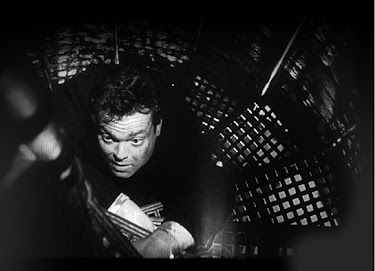


_poster.jpg)


