Directed by: Robert Wise
Written by: Joseph Moncure March (poem), Art Cohn (screenplay)
Starring: Robert Ryan, Audrey Totter, George Tobias, Alan Baxter, Wallace Ford, Percy Helton, David Clarke, Darryl Hickman, Hal Fieberling, Kenny O'Morrison, James Edwards, Phillip Pine, Edwin Max
Bill Stoker is 35-years-old, an old man in the boxing ring. Having strived for two decades to claim a title for which he simply isn't good enough, Stoker is now just going through the motions – one embarrassing knock-out loss after another. "I'm just one punch away," he tells wife Julie (Audrey Totter), who must endure every agonising blow beside him. Stoker is a loser, but he's not willing to accept it. The mood in the dressing-room before each fight is similarly pathetic: a young kid nauseously awaits his debut bout; a boxer going nowhere maintains his delusions of grandeur; Stoker restlessly mourns his absent wife, every mention of defeat striking sharply and painfully at his self-confidence. Though comparisons with Avildsen's Rocky (1976) are inevitable, Robert Wise's The Set-Up (1949) is an entirely different entity, concerned not with the glory of the boxing arena, but with the sport's seedy underbelly, of broken bones and shattered dreams. However hard these boxers try, however many fights they win, they'll never emerge from their dirty rut.
 Robert Wise was certainly one of Hollywood's most versatile directors, having released excellent films from almost every major genre – science-fiction, horror, drama, musical, war. The Set-Up was produced on a low budget by RKO, with a story that unfolds in real-time (predating Zinnemann's High Noon (1952), which famously used this approach). Despite a taut 72-minute running-time, the film packs a considerable emotional punch, as the sympathetic Stoker places his dignity on the line, sticks to his guns, and winds up being punished for his nobility. Robert Ryan gives a characteristically intense leading performance, eliciting empathy, but also exhibiting a quiet, understated dignity. When his fellow boxers emerge from their bouts, either ecstatic in victory or discouraged in defeat, there's a heartbreaking sadness in Stoker's eyes, as though every time he must front the challenge of his own aging body. Among the compelling supporting performers is David Clarke as a self-deluding washed-up boxer, and Alan Baxter (looking a bit like Frank Sinatra, I thought) as a cold-eyed gangster who wears sharp suits but, unlike Stoker, hasn't any class or principles.
 The Set-Up, in exposing the unglamorous side of the boxing profession, certainly served as inspiration for Martin Scorsese's Raging Bull (1980), and probably also influenced Kubrick in his early noir thriller Killer's Kiss (1955). The boxing match between Stoker and Tiger Nelson (Hal Fieberling) is an gritty four-round exchange of bludgeoning blows, and every connecting swipe sent a shudder of discomfort through my body. Even more fascinating, however, is how Wise focuses much attention on the match spectators, perhaps the most depraved selection of sadistic souls you're likely to find at any sporting event: an excited house-wife calls for a prolonging of the boxers' suffering; a blind man cries "go for his eyes," his cruel mind filling in the bloody details; the ever-composed Little Boy (Baxter) watches through shrewd, calculating eyes. The atmosphere of the boxing stadium is oppressive and stifling, the meeting-place of society's most decadent citizens. Ironically, it is only when he is defeated by this environment that Stoker can ever escape its clutches. He strikes the bottom of the barrel, his honour intact only in his eyes.
8/10
Currently my #4 film of 1949:
1) The Third Man (Carol Reed) *2) White Heat (Raoul Walsh) *
3) Kind Hearts and Coronets (Robert Hamer)
4) The Set-up (Robert Wise) *
5) A Run for Your Money (Charles Frend)
6) Nora inu {Stray Dog} (Akira Kurosawa)
7) The Big Steal (Don Siegel) *
8) She Wore a Yellow Ribbon (John Ford)
9) Under Capricorn (Alfred Hitchcock)
10) Whisky Galore! (Alexander Mackendrick)

 Robert Ryan plays Scott, a coastguard who suffers from regular night terrors concerning memories of a war-time naval tragedy, when his ship was presumably torpedoed. His dream sequences are gripping and otherwordly, recalling the excellently surreal work achieved by Renoir in his silent short film, The Little Match Girl (1928). During his nightmares, Scott imagines an underwater romantic liaison, which, before he can get intimate, unexpectedly blows up in his face; this is an apt indication of the events that unfold later in the film. Scott is engaged to marry the pretty Eve (Nan Leslie), but his attention is soon distracted by Peggy (Joan Bennett), the titular "woman on the beach." Peggy is married to Tod (Charles Bickford), a famous blind artist who is still coming to terms with his relatively recent affliction. At just 71 minutes in length, Woman on the Beach feels far too short, the apparent victim of studio interference. Scott is obviously enamoured, and later obsessed, with femme fatale Peggy, in a manner than suggests Walter Neff's fixation with Phyllis Dietrichson, but the motivations behind his actions are inadequately explored and explained.
 Perhaps as a result of the studio's trimming of scenes, many plot-twists in the film seem somewhat contrived. Scott's extreme determination in proving that Tod is faking blindness feels so incredibly illogical – why, indeed, would Tod even consider such a con? Many wonderful scenes are severely hampered by the story's lack of exposition. In the film's most dramatic scene, amid the choppy waters of the Atlantic, Robert Ryan displays a frighteningly convincing rage that borders on pure psychosis, a quality that Nicholas Ray exploited five years later in On Dangerous Ground (1952). However, because Scott's obsession and emotional transformation had previously been explored so sparsely, the sequence feels, above all else, out of context. The performances are neverthless solid across the board, with Bickford probably the most impressive. Bennett's character is tantalisingly ambiguous: throughout the film, she slowly reveals herself to be nothing but a greedy tramp, though Scott insists on treating her as a tormented victim of abuse. The ending offers little in the way of resolution, reaffirming the sentiment that perhaps this film isn't all there.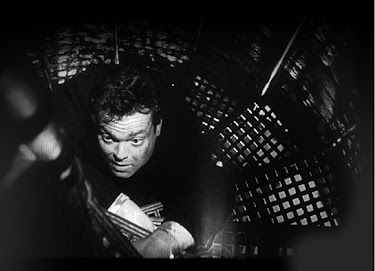


_poster.jpg)


